B2B Paid Media Systems That Learn Across Campaigns
Systems that carry learning forward from one campaign to the next compound growth.
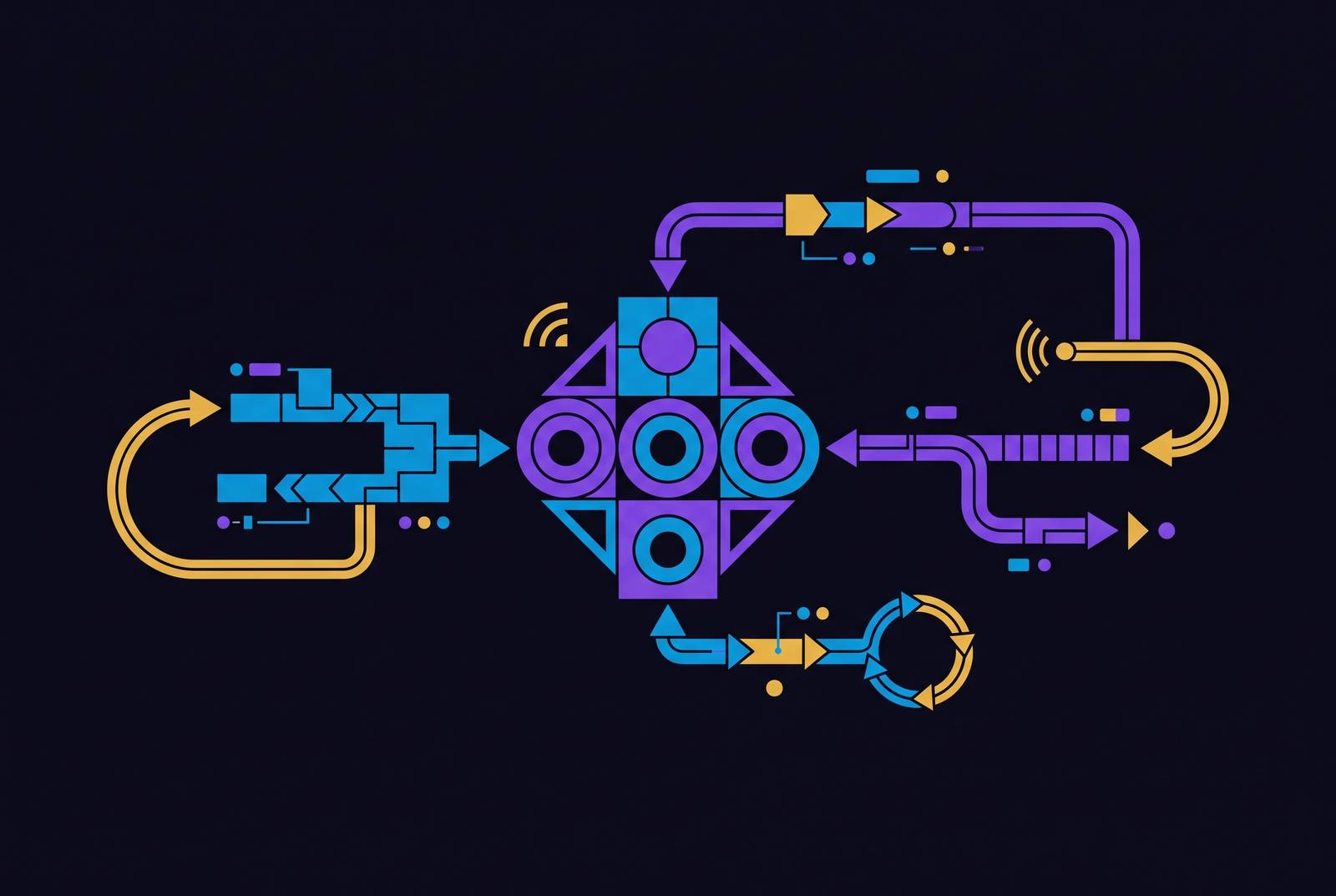
B2B paid media systems that learn across campaigns turn audience signals, creative outcomes, and attribution gaps into evidence for the next decision. That is compounding campaign intelligence for B2B growth marketing, and it requires more than AI features inside ad platforms. The advantage comes from an architecture that carries knowledge forward, connects it to business outcomes, and gives people authority over consequential decisions.
Why most B2B paid media programs fail to accumulate knowledge
The familiar feeling is that the team keeps discovering the same things. A job title generates clicks but little pipeline, a creative angle loses its pull, or a channel gets less credit than it deserves. These findings feel familiar because the program has encountered them before. Yet the next campaign still has to learn them again.
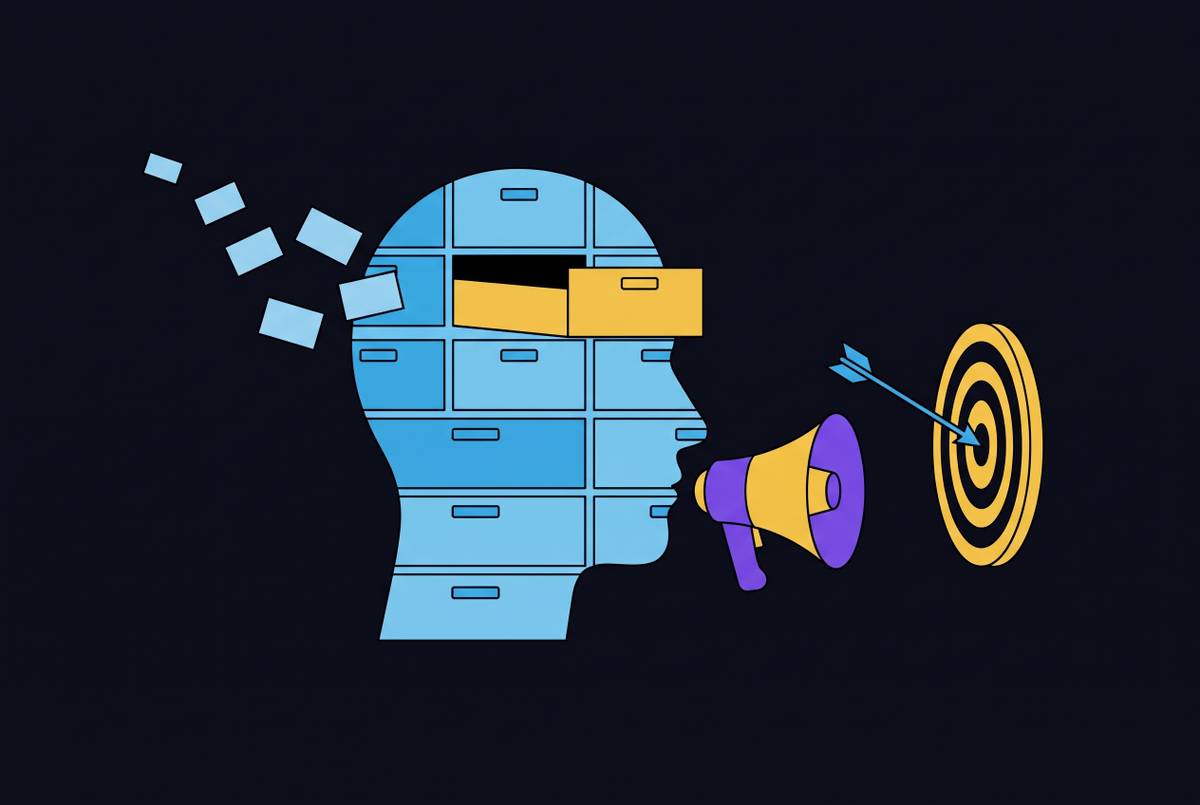
The usual workflow makes this almost inevitable. Someone writes a brief, builds a campaign, runs it, and may hold a retrospective before the next brief comes in. Knowledge about which titles progressed to pipeline or which landing page held attention survives in someone’s head or a slide deck. Neither reliably supplies evidence to the next decision. The retrospective turns into a filing cabinet with applause.
This is an architectural problem. Campaign management gives each project a beginning and an end, but what the team learns needs to carry over from one to the next. Thunder’s approach keeps paid media running as a system that uses audience signals, creative outcomes, and attribution gaps to help decide what to do next. The distinction is between closing out a project and preserving what it taught. A program built around the latter starts each decision with what it has learned.
What does a B2B paid media system that learns from past campaigns actually do
A learning system continuously converts campaign outputs into inputs for future decisions. Its memory contains three kinds of evidence, namely audience signals, creative outcomes, and attribution gaps. Audience signals show which firmographic and behavioral segments progress to qualified pipeline. Creative outcomes show which angles, formats, and messages work for which audiences and funnel stages, and where those ideas stop improving. Attribution gaps identify where measurement undercounts a channel or touchpoint and therefore distorts spending decisions.
These records matter only if they change what happens next. An archive of campaign results is not a learning system any more than a cookbook is dinner. The structural test is whether a finding survives the campaign that produced it and becomes usable evidence for another decision. That includes negative evidence to spare the program the cost of rediscovering a dead idea, along with doubts about measurement so that every reported result gets only as much trust as it warrants.
The operating principle is learning velocity. This is the rate at which a system runs clean experiments and turns results into actionable knowledge. This is not the same as launching more variants, because overlapping tests split data and make results harder to read. Manual optimization plateaus after a team has applied what it currently knows, while AI can continue improving when new feedback keeps arriving. Buying AI features is a tool purchase, but building this feedback structure is an architectural choice.
Why audience is the only layer of paid media knowledge a competitor cannot copy
A competitor can inspect your channels, imitate your creative, and borrow your messaging. What stays hidden from a competitor is the accumulated targeting knowledge behind those visible choices, including which of your buyer segments progressed to pipeline, became customers, or repeatedly went nowhere. That audience knowledge gives you an edge that lasts beyond a head start. The visible ad is the tip of the iceberg.
Ad platforms do not possess that business knowledge by default. Their data does not tell them your win-loss rate by segment, who is already a customer, or which titles actually buy. If form submissions are the reward, cheap form submissions are a perfectly reasonable answer to the task they were given. Audience quality can deteriorate while the platform appears to improve. Closing the loop from CRM conversion outcomes back to targeting teaches the algorithm a more useful definition of success.
The practical architecture is one ICP audience enriched with CRM data, with exclusions for existing customers and competitors, synced across channels. Identity resolution matters because work email lists often match poorly, limiting how much of that audience a platform can reach. The choice of channels should follow actual persona match rates instead of assumptions about where B2B advertising belongs. Continuous CRM feedback, the kind of sustained execution supported by agent-driven approaches such as Thunder’s, lets targeting keep learning without waiting for another manual handoff. The advantage lives in the accumulated audience evidence.
How Google and LinkedIn function as structurally different learning environments
Google captures demand from buyers already searching for a solution. LinkedIn builds demand among target accounts that fit the ICP before they begin searching, making the platforms different learning environments. Evidence from each channel must be interpreted in light of the job it performs. Otherwise, a system can mistake a difference in buyer readiness for a difference in channel value.
Both platforms need enough conversion data before their algorithms can learn meaningfully from a particular program. Below that level, they rely more heavily on population-level priors than on evidence about your buyers. Splitting a thin budget across both can leave neither with enough signal to improve. Google Performance Max needs a lot of conversion data and should run only with offline conversion data and strong brand exclusions. Linking Google Ads to CRM outcomes teaches it to value qualified pipeline rather than treating every form fill as the destination.
LinkedIn has a related but different risk because low-friction lead capture can bring in more leads at the cost of quality. Pre-filled lead gen forms can collect contacts who have not consciously decided to engage. Sending prospects to a website asks them to self-select, reducing volume but improving pipeline conversion. The relevant comparison is therefore not simply which route produces cheaper leads. It is which route produces useful business outcomes, and whether those outcomes return to the algorithm as feedback.
Why attribution is where learning systems either close or break
Even a program with strong audience data and clean experiments can learn the wrong lesson. Attribution decides which activity receives credit, so errors here shape every later conclusion about what worked. Last-click attribution is especially dangerous for sales-led B2B because it rewards the final touchpoint while undercounting the activity that built awareness and intent. The channel that catches demand can appear to have created it. That is a fine arrangement for the catcher, but a poor account of the game.
Device and identity fragmentation deepen the distortion. A buyer may research on mobile, click through on desktop, demo on a personal laptop, and sign from a phone. Attribution systems that assume one device per person, combined with audience lists built around work emails, struggle to connect that journey. Channels used mostly on mobile then get too little credit while the final desktop click gets too much. As budgets follow those reports, undercounted channels lose funding and over-credited channels gain it.
For long sales cycles, cohort-based reporting groups leads by generation month and tracks pipeline at 180 and 365 days, giving a fuller view than a short attribution window. First-party infrastructure, including Meta CAPI and Google Enhanced Conversions, helps address the incompleteness of increasingly unreliable browser tracking. But no attribution view deserves unquestioned authority, because first-touch, last-touch, and multi-touch each distort the picture differently. Measurement calls for triangulation, using multiple signals and looking for agreement. Fixing attribution is not a reporting upgrade, but a prerequisite for learning correctly, because corrupted evidence poisons every optimization that follows.
What a full-stack learning system coordinates that individual tools cannot
Separate tools can improve their own metrics while the program as a whole learns very little. A team might optimize LinkedIn for cost per lead, Google for conversion volume, and review attribution quarterly. Each part can seem to work well without anyone linking the results to qualified pipeline. Integration matters because it lets the program read those signals together. Local improvement is not the same as shared knowledge.
Creative and landing pages belong in that same system. Poor conversion can reflect either a creative problem or a landing-page problem, yet platform reporting alone can make them look alike. Changing the wrong variable does not resolve the cause, even when the change is executed quickly. Agents can shift budgets toward winners, adjust bids, pause fatigued creative, and catch delivery problems across campaigns more consistently than a team performing periodic reviews.
Demandbase’s Mojo illustrates one version of full-stack coordination by building audiences, launching campaigns, monitoring performance, and feeding past results into the next campaign. Its scope includes Google Ads, LinkedIn Ads, Meta, Marketo, Salesforce and Slack. Who approves changes that reach beyond the ad account, however, remains important to the architecture. Moving budgets between channels involves demand gen, marketing ops, and sometimes finance, while new copy may need brand review. An audience change also affects the CRM lists sales reps use, so integration creates a governance problem as well as solving a data problem.
Why continuous execution requires human judgment at specific decision points, not everywhere
Dividing work into routine work and strategic work gives too little guidance on how to run a learning system. A budget change may be ordinary execution within agreed limits or a consequential shift between channels. The relevant boundary is whether the action stays inside established guardrails or changes a business judgment. Agents can keep the work running within those limits. Named people must remain accountable for consequential decisions when the evidence leaves room for interpretation.
That places bid changes, fatigue pauses, and tracking-gap flags in a different category from redefining a qualified conversion or changing the ICP. The latter decisions determine what the system will treat as success. In Thunder’s model, agents handle continuous optimization across Google and LinkedIn, while human marketing experts govern consequential judgments about what the evidence means for the next campaign. The principle is specific ownership at the decision boundary.
Without that ownership, the vendor’s default quietly becomes the business’s policy. That is under-governance, but requiring approval for every bid adjustment creates the opposite problem and throttles learning velocity. Creative differentiation shows why the boundary matters. When agents are rewarded for the same formats that perform well, they can push competing programs toward the same patterns, while positioning that people recognize is still a judgment call. The system needs permission to execute continuously and a clear answer about who can change what it is trying to achieve.
How to diagnose whether your current program is actually compounding
The first diagnostic question concerns audience memory. Do CRM outcomes keep shaping targeting, including which segments became qualified pipeline, churned, or never progressed? A genuinely compounding program can show how those outcomes inform the next audience. The next question concerns creative memory. The useful evidence is a structured record of which angles worked for which audiences at which funnel stages.
Does the program use first-party signals and offline conversion uploads, and does its interpretation account for the multi-device, multi-identity buying journey. Conversions reported by the platform cannot show that connection on their own. A program should be able to distinguish a creative ceiling from a landing-page problem, an attribution gap, or a channel-budget allocation issue.
These questions do not require every campaign to win or every attribution dispute to disappear. A program that genuinely compounds can show that prior evidence changes subsequent choices and that uncertainty remains visible where the evidence is incomplete. A program that answers the audience and creative questions only partly, and cannot answer the measurement or diagnosis questions, is still optimizing within campaigns. To learn across campaigns, the program needs to change how it carries audience data, measurement, and creative evidence forward, which takes more than another AI feature. The decisive test is whether the next campaign starts with knowledge the previous one earned.