A/B Testing Frameworks for B2B Landing Pages
Most B2B teams measure landing page tests by form fills, not by qualified leads that actually close.
Only 17% of marketers who test see meaningful, consistent conversion lifts, even though companies that A/B test properly grow revenue 1.5 to 2 times faster than those that don't Landing Page A/B Testing: Your 2026 Guide to 2x Conversions – The Gro… mckinsey.com. That gap alone should stop you.
So what's going wrong? Two failure patterns appear constantly. The first is testing several elements at once, then trying to figure out afterward which one actually moved the needle. The second is cutting a test short the moment one variant looks like it's winning. Early results are noise dressed up as signal. Calling a winner too early is basically astrology with extra steps Landing Page A/B Testing: Your 2026 Guide to 2x Conversions – The Gro… mckinsey.com B2B SaaS Ad Testing Frameworks for LinkedIn & Meta (2026) - SaaS Hero.
A subtler failure specific to B2B is optimizing for raw conversion rate (form fills and clicks) without connecting test outcomes to pipeline, so a page can "win" a test and still produce zero qualified opportunities. A landing page can "win" its test and still produce zero qualified opportunities. That should sound alarming, because it means a huge share of B2B testing is answering a question nobody actually needed answered.
Consider what's actually at stake here. A landing page in B2B isn't a design exercise, it's the moment a paid-media budget either turns into pipeline or evaporates. Every dollar spent on Google or LinkedIn ads funnels through that page. Test it badly, and you're not just wasting the testing budget, you're corrupting the read on everything upstream, the ad creative, the targeting, the whole media plan.
This piece lays out a different way to run these tests: start from a hypothesis tied to pipeline, sequence what gets tested and in what order, and judge the winner by qualified-lead outcomes, not vanity metrics.
What a pipeline-tied hypothesis looks like
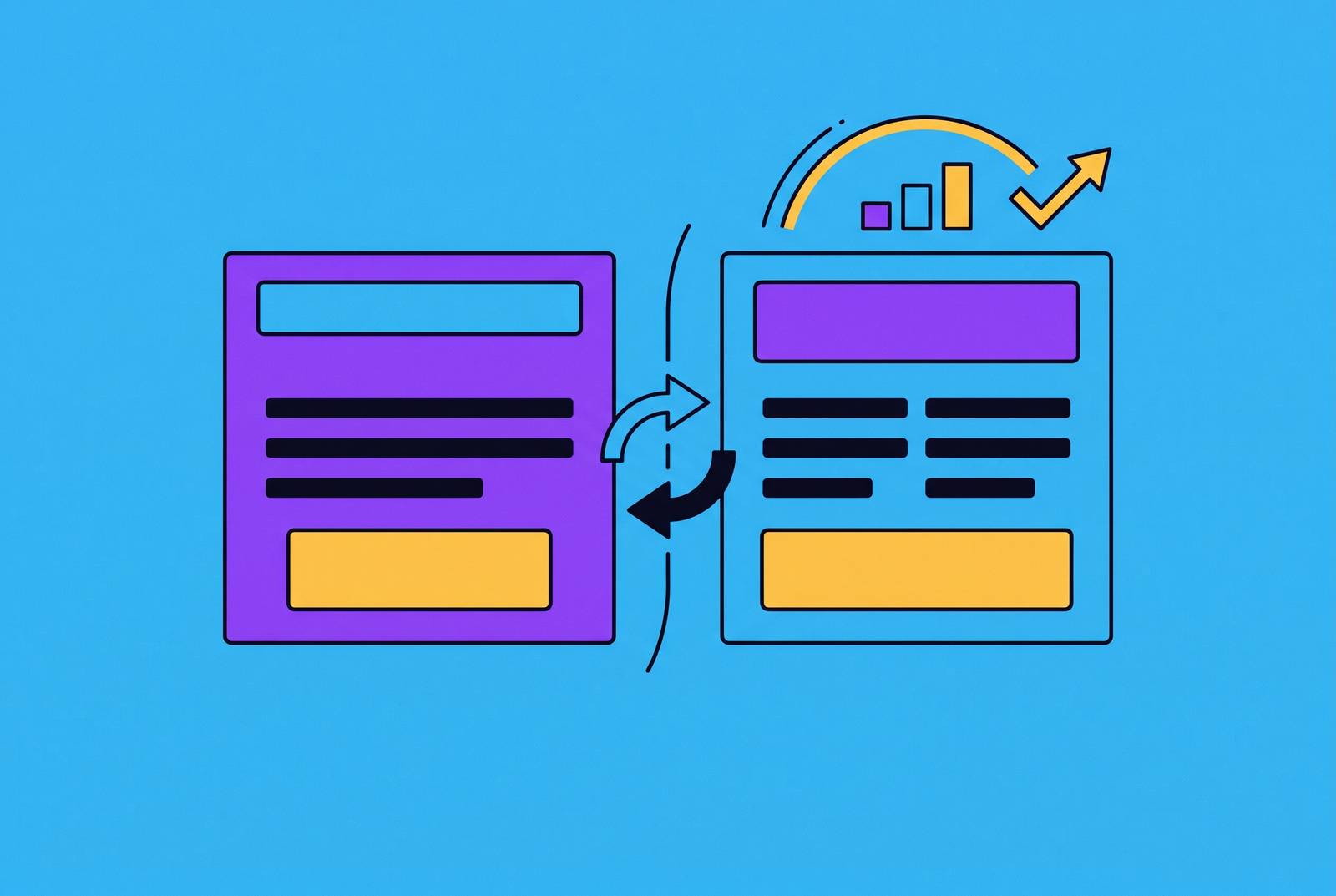
The one rule that never bends in a proper A/B test: change one element at a time. It's the only way to know what actually caused the result you're looking at.
That discipline starts before the test even launches, with the hypothesis itself. Most teams don't write hypotheses. They write guesses and call them hypotheses. "Let's try a shorter headline" is a guess. It's not wrong to try, but it doesn't tell you what you'll learn if it works, or why it might.
A real hypothesis reads more like this: enterprise buyers in the target segment are dropping off before they reach the proof section, because the above-the-fold copy leads with features instead of outcomes; switching the hero headline to an outcome frame should increase scroll depth and form completions among that segment. Notice what that sentence does. It names a segment, a behavior, a suspected cause, and a specific, measurable prediction. That's the difference between a test and a shot in the dark.
Where do hypotheses like that come from? Not from creative brainstorms. They come from data already sitting inside the funnel. CRM records show which lead sources actually turn into sales-qualified leads and which ones just generate noise. Sales calls reveal the objections that keep coming up right before a deal stalls. Analytics show exactly where visitors bail, and whether that drop-off pattern differs by traffic source or by segment. Even the ad creative itself is a source: when a message earns clicks but nobody converts on the page, that gap between promise and delivery is a hypothesis waiting to be tested.
Define what "winning" means before the test launches, and define it in pipeline terms, not platform terms. The winning page isn't the one with the higher form-fill rate. It's the one whose leads move further through the sales cycle.
And that requires something a lot of teams don't have wired up: CRM integration⟧c9⟧. Without it, "success" gets measured in cost per lead and nothing else, which is a bit like judging a chef by how fast the kitchen door swings. In one 2026 benchmark study, only advertisers with CRM data connected could report on pipeline and cost per customer at all, everyone else was stuck reporting cost per lead as if that were the whole story. If there's no CRM connection, the testing program is optimizing blind, no matter how disciplined the rest of the framework looks.
Which elements to test first
Not every element on a landing page carries the same weight, so testing them in whatever order feels convenient is a waste of traffic. Sequence should follow leverage, not ease.
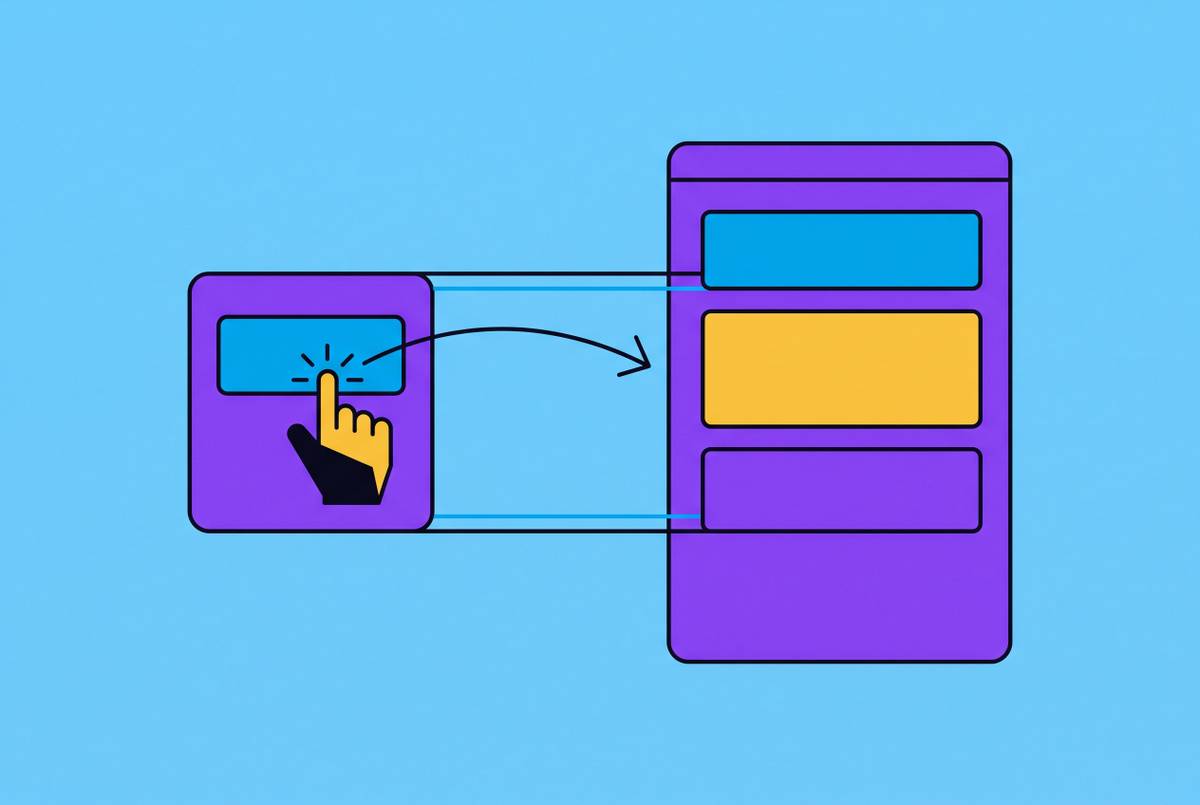
Start at the top of the page, literally. The hero headline and value framing are the first thing every visitor reads, and they set the frame for everything that follows. An outcome-based headline against a feature-based one is a high-leverage test because it changes how a visitor interprets the entire rest of the page, not just one line of copy.
CTA placement comes next.
Social proof deserves its own category, and it's more nuanced than "add testimonials." Industry-matched testimonials and case study logos beat generic reviews across nearly every B2B segment tested mckinsey.com. The real hypothesis isn't whether to include proof, it's whether the proof matches the visitor's industry and role mckinsey.com. A fintech buyer doesn't care that a manufacturing company loved your product.
Pricing and offer framing is another high-leverage area, and it splits cleanly by segment. Enterprise buyers respond better to pricing framed around outcomes, while SMB buyers convert better when monthly pricing is shown clearly and upfront. This is consistently one of the highest conversion-lift categories once teams isolate it properly.
Page length and information density round out the structural tier. Enterprise buyers typically need more detail to justify a purchase internally, while SMB buyers want the fastest possible route to a demo. This is a structural test, not a copywriting tweak, and it should be treated that way.
A useful parallel comes from ad creative testing. In the 3-2-2 framework used for ad testing, the "hook" drives 60–70% of the variance in click-through rate, and the above-the-fold message is the landing page equivalent of the ad hook B2B SaaS Ad Testing Frameworks for LinkedIn & Meta (2026) - SaaS Hero. The above-the-fold section of a landing page is functionally the same thing: the hook that decides whether anyone sticks around long enough to care about the rest.
Everything else, button color, image style, small copy edits, matters less and should wait. Test those only after a winning message frame is locked in. Otherwise you're optimizing the color of a door on a house that hasn't been built yet. Because many visitors drop off without scrolling, moving the CTA above the fold is a common high-leverage hypothesis for CTA placement, according to 2X / growthstackblog research.
Traffic, timing, and the minimum conditions for a valid test
B2B landing pages often don't get much traffic, and that single fact changes the entire design of a test. Low traffic means fewer visitors reaching statistical significance, and if a test can't reach significance in a reasonable window, running it produces noise, not evidence. The fix is to build up traffic first. It's to build up traffic first.
AI-assisted personalization tools have gotten faster at declaring results. Per a Forrester report on experience optimization from 2026, time-to-significance for high-traffic campaigns has dropped from about four weeks down to under ten days, though it applies to high-traffic campaigns. That's a real gain, but it applies to high-traffic campaigns. Low-traffic B2B pages don't get that speed-up automatically, no matter how good the tool is.
Statistical significance gets thrown around loosely. It's a measure of confidence that the difference between two variants reflects a genuine effect, and not just random noise from a small sample Landing Page A/B Testing: Your 2026 Guide to 2x Conversions – The Gro… mckinsey.com. A 95% confidence level is the standard bar before naming a winner, and it's the same bar used before making a high-stakes call like reallocating budget or shifting a whole audience B2B SaaS Ad Testing Frameworks for LinkedIn & Meta (2026) - SaaS Hero. Anything less, and the "winner" might just be a coin flip that landed heads three times in a row B2B SaaS Ad Testing Frameworks for LinkedIn & Meta (2026) - SaaS Hero.
The most common mistake here is psychological: stopping a test early because one variant is pulling ahead. Early leads reverse constantly.
A few mechanical basics matter too. Split traffic as evenly as possible between variants, since an uneven split introduces bias before the test even starts. And before launching anything, gather a baseline, several weeks of historical performance at minimum, so you know what normal looks like: seasonal swings, differences by traffic source, day-of-week patterns.
For pages that just don't get enough traffic to test properly on their own, there are workarounds. Run the test over a longer window. Consolidate traffic onto fewer pages so volume concentrates instead of splitting thin. Or run LinkedIn Lead Gen Forms in parallel as a comparative benchmark, since LGFs convert at 10 to 20% by skipping the landing page entirely, which gives a useful read on channel-level behavior even when the landing page sample is too small to trust mckinsey.com B2B SaaS Ad Testing Frameworks for LinkedIn & Meta (2026) - SaaS Hero 6 Best AI Landing Page Builders with A/B Testing That....
How the metrics hierarchy connects test winners to pipeline
Most B2B teams crown a test winner using surface metrics, form fills, click-through rate, cost per lead, and never trace those leads any further. But what happens to those leads after the form submits? That's the question the whole framework depends on.
A page can post a higher raw conversion rate and still be the worse choice, if the leads it attracts are lower quality. Optimize for the wrong signal, and you'll crown the wrong winner every time.
Diagnostic metrics (useful for diagnosing where friction exists) include CTR, CPC, bounce rate, and scroll depth. These are useful for spotting where friction lives on the page, but they don't decide anything on their own. The second tier is intermediate, tracked as leading indicators: form fill rate, cost per lead, MQL volume. Useful, but still not the finish line. The third tier is decisional, and this is where a winner actually gets named: MQL-to-SQL conversion rate, pipeline value generated, cost per SQL. None of that third tier is visible without CRM data feeding back into the picture.
One principle from ad testing applies just as well to landing pages: a variable that improves click-through rate but doesn't move cost-per-SQL doesn't qualify as a winner. It might look great in a dashboard. It's still the wrong page if it isn't producing better pipeline.
Write down the null results, not just the wins. That's useful information. It narrows the list of things to test next, and it's just as valuable as an outright win, even though nobody puts "we learned nothing changed" in a slide deck. The metrics hierarchy for B2B A/B testing connects test winners to pipeline, according to saashero.net / S1 research.
Testing the channel alongside the page: Google vs. LinkedIn landing page behavior
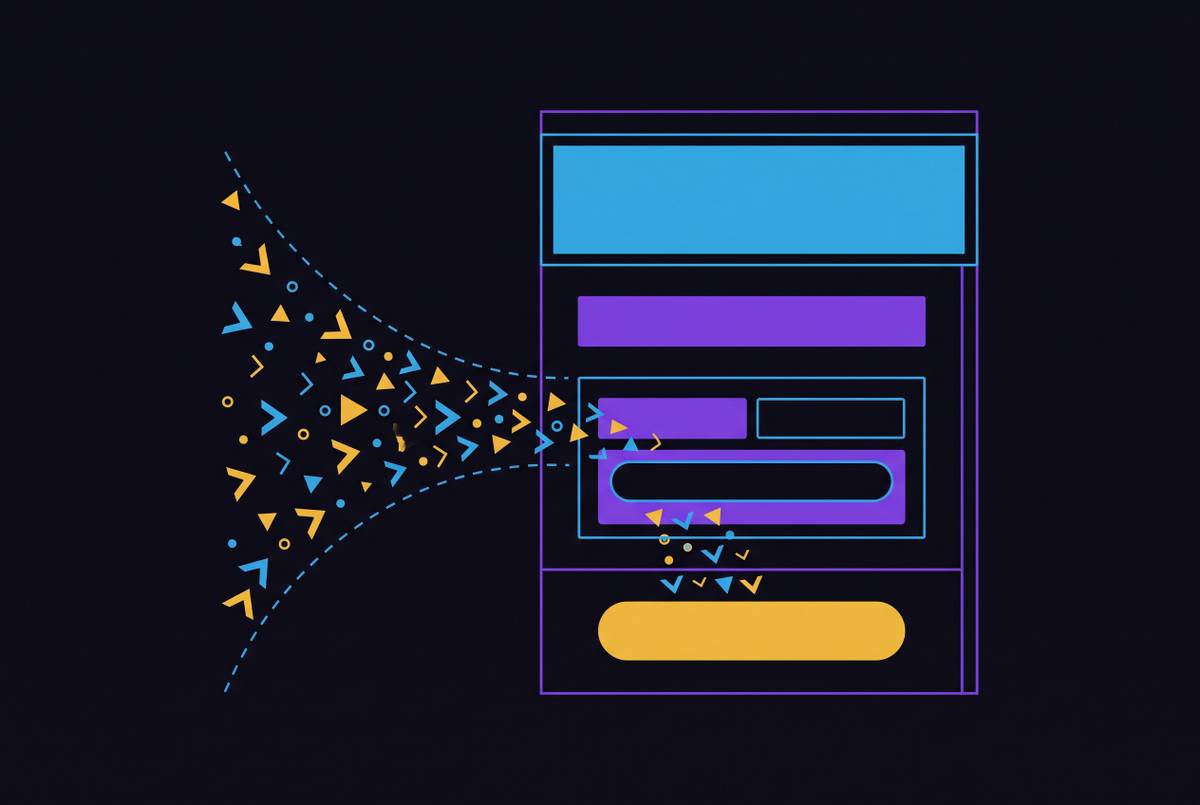
Traffic source isn't a background detail, it actively shapes how visitors behave once they land. A visitor coming from a Google Search ad typed a specific query and has high, immediate intent. A visitor coming from a LinkedIn Sponsored Content ad was scrolling their feed and didn't ask for this. A visitor arriving from a Google Search ad (high intent, specific query) behaves differently on a landing page than one arriving from a LinkedIn Sponsored Content ad (lower immediate intent, trust-building orientation).
Google Search captures existing demand, so the page's job is to match the searcher's query frame precisely and reduce friction to conversion. LinkedIn is the opposite job: creating demand, or at least surfacing it, from people who weren't necessarily looking. The page needs to build credibility fast, show relevance to the visitor's specific role, and offer a low-friction next step before asking for any real commitment.
LinkedIn also comes with its own testing infrastructure. Campaign Manager has a native A/B testing tool built in, letting structured tests run inside the platform itself. There's also a worthwhile experiment comparing Classic campaigns against Accelerate campaigns: Accelerate campaigns have delivered up to 42% lower cost per action than manually run campaigns in some reporting, which makes testing AI optimization against manual control a high-leverage move for any given account generateleads.online 6 Best AI Landing Page Builders with A/B Testing That....
The single highest-leverage LinkedIn test, though, might be the simplest one: Lead Gen Form against landing page mckinsey.com B2B SaaS Ad Testing Frameworks for LinkedIn & Meta (2026) - SaaS Hero 6 Best AI Landing Page Builders with A/B Testing That.... LGFs convert at 10 to 20% because they remove the landing page from the equation entirely 6 Best AI Landing Page Builders with A/B Testing That.... Run that comparison, and it tells you something uncomfortable but useful, whether your landing page is adding value at the bottom of the funnel or actively subtracting it 6 Best AI Landing Page Builders with A/B Testing That....
Below the 50,000–200,000 member sweet spot for LinkedIn B2B campaigns, frequency builds up fast enough that fatigue starts confounding the test results ppcblogpro.com.
Last, a caution that applies across both channels: paid search tends to get over-credited in attribution reports, because it captures last-touch credit for journeys that actually started somewhere else. A landing page that "wins" its test running on Google traffic might just be cashing in on trust LinkedIn built earlier in the journey. Attribution models need to account for that before any test result gets used to justify a budget shift.
Personalization and segmentation as a testing layer, not a shortcut
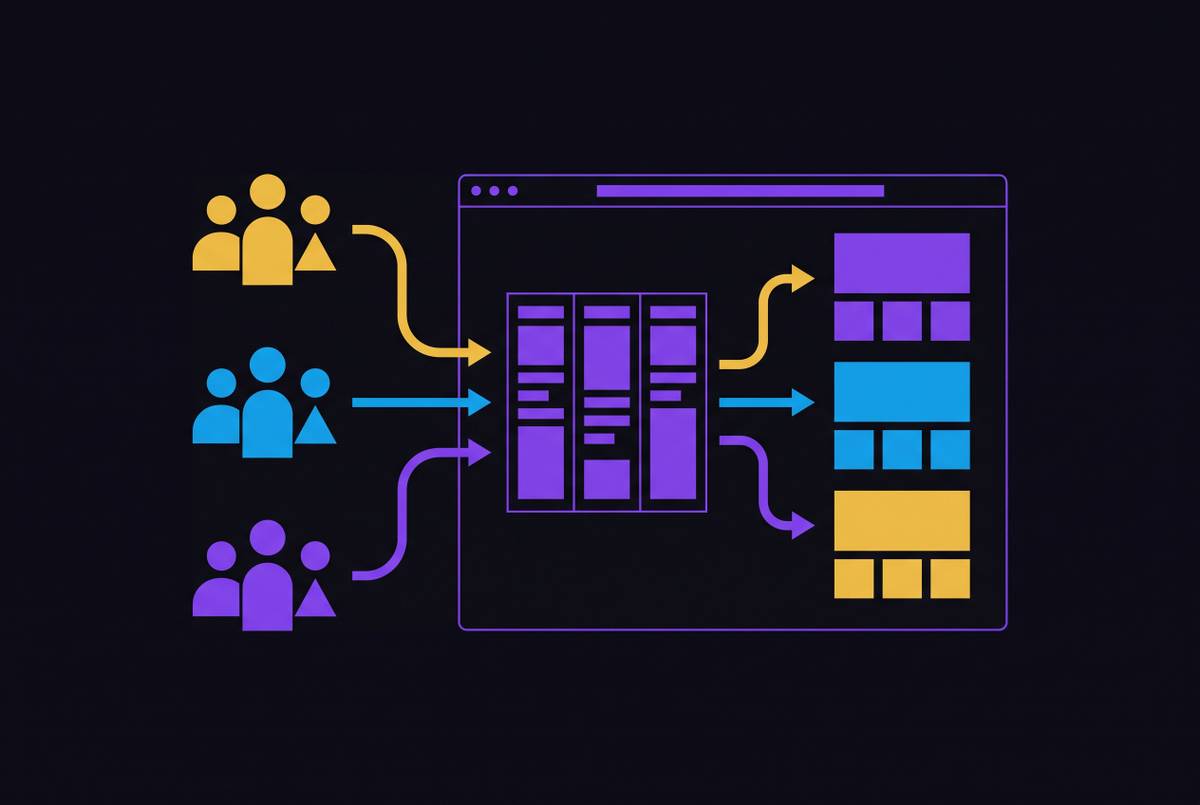
B2B buyers are not one audience wearing different name tags. Enterprise and SMB buyers behave differently. Industries behave differently. Even different roles within the same buying committee, a finance lead versus a technical evaluator, respond to different framing on the same page.
This isn't a fringe preference. McKinsey's 2021 research on personalization found 71% of consumers expect personalized interactions, and 76% report frustration when a page feels generic McKinsey's 2025 Personalization Report. Translate that into B2B terms and it means industry-matched messaging and role-specific proof aren't a nice-to-have, they're closer to a baseline expectation McKinsey's 2025 Personalization Report.
Testing backs this up directly. Research from the CXL Institute found companies running continuous A/B testing on personalized pages see conversion rates 20 to 30% higher than pages that stay static.
But personalization needs to be tested, not just deployed. Segment first, by company size, industry, funnel stage, or traffic source, whatever split actually matters for the business. Then run tests inside each segment separately, not pooled together. A message that wins with enterprise buyers may be a loser with SMB buyers, and pooling them together obscures both results.
AI-assisted segmentation tools in 2026 can define and serve micro-segments that used to be too small or too complicated to test individually. That's a genuine capability. But the tool doesn't set the hypothesis, and it doesn't decide what counts as a win in pipeline terms. That still takes a person who understands the business. Dynamic content that swaps messaging automatically without a controlled test isn't testing, it's just rearranging furniture. It changes what visitors see, but it doesn't tell you what actually worked.
Building a testing cadence that compounds rather than resets
A/B testing isn't a project that wraps up with a final report. It's a compounding system, where each test sharpens the baseline for the next one. Treating it as a one-off means every test starts from zero.
Compounding takes some operational structure to actually happen. Keep a documented test log: the hypothesis, what variables changed, how much traffic ran through it, how long it ran, the results including the null ones, and what hypothesis it points to next.
After every test, write down what the result actually implies. What's locked in now? What's still an open question? Skipping that step means the next quarter's team ends up re-testing something that was already settled.
Fatigue matters here too, and it's not just an ad-creative problem. LinkedIn's smaller B2B audience pools mean frequency builds up faster than on broader platforms, so a landing page tied to a LinkedIn campaign may need refreshing on a schedule tied to spend level, not a fixed calendar date.
Sequencing still applies at the cadence level, not just within a single test. Run message-level tests first, headline, value framing, proof type. Design-layer tests, formatting and visual hierarchy, come last. It's the same hook-then-format-then-CTA logic used in ad testing, just applied to a page instead of a creative unit.
Don't run more simultaneous tests than the traffic can actually support. Splitting an already-thin sample across multiple parallel tests just produces two unreliable results instead of one solid one Landing Page A/B Testing: Your 2026 Guide to 2x Conversions – The Gro… mckinsey.com.
The real payoff of this cadence isn't any single test, it's the record itself. A documented history of what worked, for which segment, under what conditions, becomes an asset that outlasts any one campaign or person running it. Skipping the documentation means that knowledge walks out the door with whoever ran last quarter's test.
Tools that support pipeline-tied landing page testing
The tool landscape here is large, over 200 options by some counts, which makes picking one feel harder than it needs to be. The better approach is to work backward from the framework already laid out, rather than starting from a feature list.
The right tool for a given team depends on team size, how much traffic the pages actually get, and whether the platform can integrate with the CRM already in place. A tool with a beautiful visual editor is useless for this framework if it can't pass data back to the CRM, because the whole point is judging winners by pipeline outcomes, not click-through rate.
Low-traffic B2B pages need a platform built around longer test windows and smaller sample sizes, not one tuned for high-volume e-commerce testing. Teams running LinkedIn campaigns alongside landing pages benefit from tools that can pull in Campaign Manager data directly, so channel-level results and page-level results sit side by side instead of living in separate reports.
None of that matters, though, without the discipline covered earlier: a real hypothesis, a sequence that respects leverage, a metrics hierarchy that ends at pipeline, and a cadence that documents what gets learned. The tool executes the framework. It doesn't replace it.