Lead Capture Alternatives to Forms on B2B Landing Pages
Only two lead capture alternatives actually qualify buyers before sales picks up the phone.
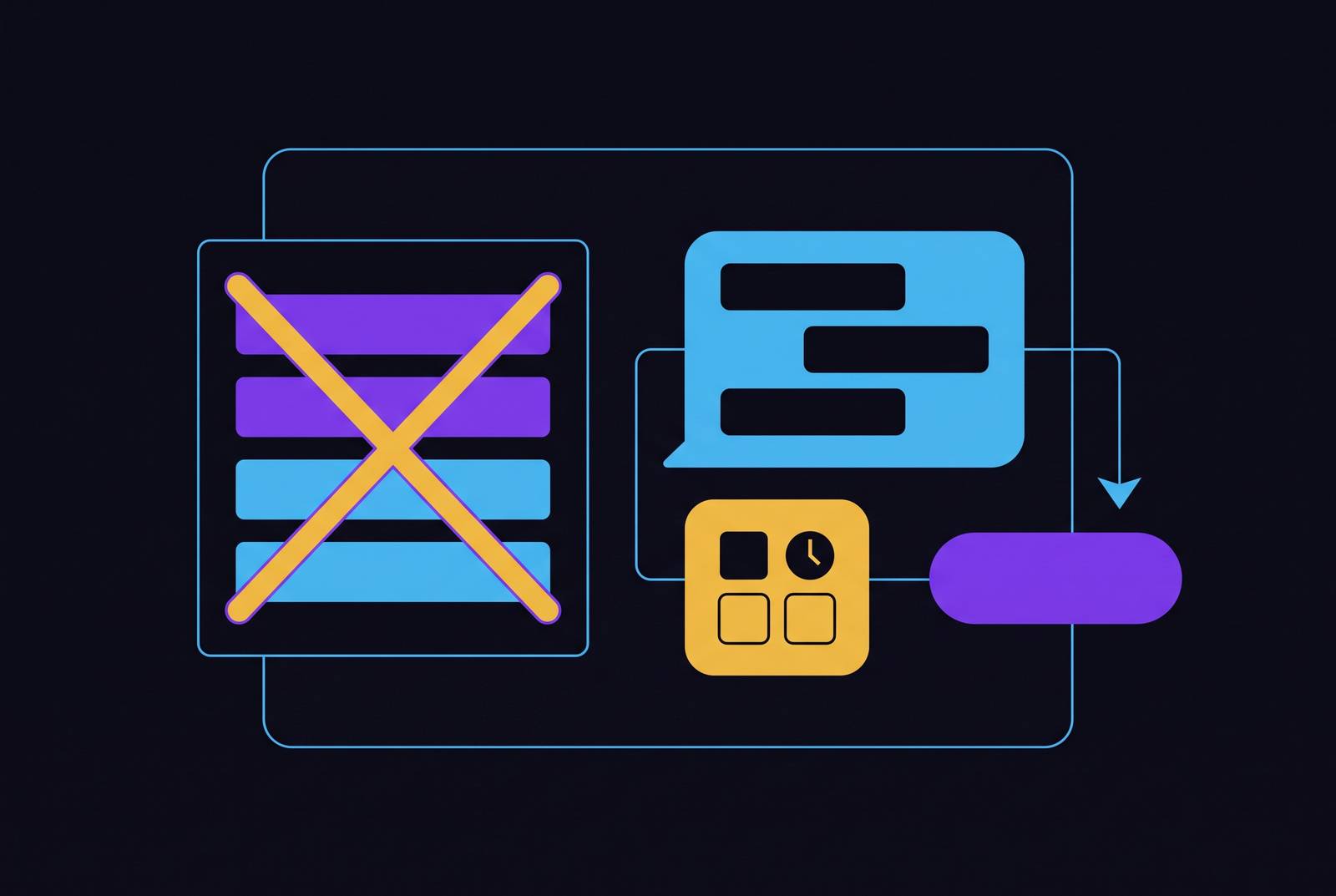
Most teams swap out a web form expecting the pipeline to get better. It usually doesn't, because the form was never really the problem. A static form stops the qualification process cold. The visitor hands over their name, email, and company, gets nothing back, and the rep ends up with a contact record that carries no documented intent, no sense of whether this person fits the ideal customer profile, and no buying context. The conversion rate might tick up. The quality of what lands in the rep's queue often doesn't move.
Docket's ranking of seven lead capture alternatives opens on exactly this point: five of the seven solve a real problem, but none of those five touch the qualification gap. Only two produce something meaningfully better than a plain contact record. Just one produces what Docket calls an Agent-Qualified Lead, or AQL, a buyer a sales rep can act on before discovery even starts.
There are really only two outputs worth tracking across every alternative on the table. One is the contact record: name, email, company, the raw material a rep has to work with from scratch. The other is the qualified lead: documented intent, confirmed fit, and buying criteria that surfaced inside an actual conversation. Every tool in this space produces one or the other, and the question for any marketing team is which output a given tool hands to sales, and whether that output is the one the business needs at that stage of the funnel.
What each alternative replaces, and what it leaves untouched
Each alternative fixes a specific point of friction in the old form-based motion. Most leave the qualification gap exactly where they found it.
Progressive enrichment and conversational forms, think Typeform, multi-step HubSpot forms, or Jotform's conditional logic, replace the pain of a long, irrelevant form with something shorter and smarter. What they don't replace is the form itself, or the conversation that would actually qualify a buyer. The output is still a contact record, just a more complete one. These tools earn their keep when form-fill volume is high, qualification needs are simple, or a bigger infrastructure change just isn't in the cards. Keep the field count low here, three or four fields at most, because every extra field is a cost in lost conversions, and sync submissions straight to CRM so follow-up can move fast.
Video CTAs, like a vendor offering interactive video or short recorded-walkthrough flows, solve a different problem. A buyer can watch a product in action instead of reading flat text on a page, and that builds intent before anyone's asked to convert. But video is one-directional. The buyer watches; nobody has to answer anything, so no qualification data comes out of the viewing experience itself. The rep still gets the same contact record, just a warmer version of it. This tier earns its place at the top of the funnel, for intent-warming, demo previews, and product-led content.
Reverse IP and visitor intelligence tools, Leadfeeder or Dealfront, 6sense, Demandbase, work on a completely different axis. These are outbound motions triggered by an inbound signal, not an inbound qualification motion in their own right. The buyer doesn't know they've been identified, and no exchange has taken place between them and the company. What this replaces is invisible traffic: sales now has a reason to reach out to accounts that visited and never converted. What it doesn't replace is a conversation. Qualification is still entirely the first call's job. The output here is a company-level intent signal, not an individual lead and not a conversation, which makes this tier best suited to ABM motions and named-account sales. By the time a rep acts on the signal, the buyer has often already talked to a competitor who happened to be in the room when that intent was live.
Direct booking tools, Chili Piper, Calendly with routing, HubSpot Meetings, move lead capture into a scheduling flow instead of a traditional form. Friction drops in a real way, but how much qualification depth comes with it depends entirely on the routing logic behind the scenes. A booked meeting is a strong signal that someone's interested. It still carries no structured qualification record into the call itself. This tier fits buyers who already know what they want and self-qualify going in, where the constraint is friction.
LinkedIn Lead Gen Forms, the native paid format, pre-fill using the member's own LinkedIn profile data, so friction drops the moment the member engages with the ad. Docket points out this alternative skips the landing page. The qualification data that comes through is profile-level: title, company, seniority, a solid firmographic signal, though still no documented intent or buying criteria. The output is an enriched contact record, better qualified than most raw form submissions, and it works best for top-of-funnel demand capture on LinkedIn, where audience targeting is already doing some of the ICP filtering before the click ever happens. Match the form's promise to the ad exactly here, since that alignment is what keeps the lead quality honest.
Why contact records and qualified leads require different downstream motions
The distance between a contact record and a qualified lead doesn't just sit quietly in a spreadsheet as a data problem. It's a sales capacity problem, and it gets paid for, literally, on every single first call a rep takes.
Handing a rep a contact record forces the entire qualification conversation to happen live, on that first call: intent, budget, timeline, who else is in the room, whether this company even fits the profile worth selling to. None of it is documented going in. Discovery calls built on that much uncertainty tend to run into trouble. No-show rates climb. The window to engage shrinks. Conversion to opportunity drops because a share of those buyers were never ready for a sales conversation.
Handing a rep an AQL instead changes the shape of that same call. Discovery turns into confirmation. The rep can point back to what the buyer already said in the earlier conversation, move faster toward fit and next steps, and spend the actual call time on deal-specific questions instead of baseline qualification that should've happened already.
The effect compounds across a quarter. A pipeline stacked with contact records needs more sales capacity just to work through the same number of opportunities. A pipeline where a meaningful share of leads arrive as AQLs produces more opportunities out of that same amount of sales capacity. Same team, same hours, but the math differs, simply because of what arrived in the queue before the rep ever picked up the phone.
How to match the alternative to where the buyer is in the journey
Most of a B2B buyer's journey happens long before anyone enters a sales pipeline, so most of these alternatives are operating at a stage where qualification hasn't even started for the majority of visitors. The right tool depends on where the buyer actually is, not on which tool happens to be trending.
Early-stage, anonymous traffic calls for reverse IP and visitor intelligence tools. They surface account-level intent without needing a conversion event at all, so outbound and ABM motions get fed accounts that are already quietly researching a solution.
When traffic is top-of-funnel and paid, LinkedIn Lead Gen Forms do their best work, capturing firmographic context right at the moment of ad engagement without the landing page getting in the way. This works especially well when audience targeting is already filtering for ICP fit, so the profile data that comes through actually means something.
Mid-funnel, content-engaged traffic is the natural home for video CTAs and progressive enrichment. Both play a legitimate role in warming a buyer up and collecting a bit more data along the way. The output is still a contact record, and the real qualification work is still sitting out there, deferred.
High-intent, late-stage traffic, people on the pricing page, the demo page, the solution page, is where the qualification gap costs the most. A static form at this exact moment captures someone who's genuinely ready to be qualified and hands them a form to fill out instead. Direct booking tools cut the friction, but they don't close the qualification gap. AI agents are the only alternative built to qualify a buyer in that exact moment, while the intent is live.
Most B2B landing pages see mixed-intent traffic, visitors at every one of these stages hitting the same page at the same time. There's rarely one right alternative across the board. The right approach matches the alternative to the entry point, with a clear sense, in advance, of what output each one actually produces.
What AI agents add that the other six alternatives cannot
Speed and availability both matter, but they aren't what gives AI agents their real advantage on a landing page. Qualification happens inside the conversion event itself instead of waiting for a call that might not happen for days.
Every other alternative on this list defers qualification to some future conversation. An AI agent turns the landing page into that conversation. Docket defines the AQL output with some precision: a buyer who has articulated real intent and matched ICP criteria inside a structured AI conversation, not a buyer whose interest was guessed at from how long they lingered on a page. That distinction is what tells a rep what they can actually do with the lead the moment it arrives.
AI agents also run around the clock, with no shift to clock out of. That matters more than it might seem at first, because complex B2B buyers do their evaluating off-hours and across whole buying committees, at times when human qualification capacity simply isn't on. The qualification gap is central to how paid media turns visitors into pipeline, so systems like Thunder's AI agents are built to qualify leads before they ever reach a sales rep, capturing intent and fit inside the conversation itself and skipping the handoff of a contact record and an empty discovery call.
There's a compounding piece here too. The agent builds up a record over time of which questions moved a buyer toward qualification, which objections came up, and which signals lined up with conversions down the line. That learning carries forward into every conversation that follows instead of resetting with each new visitor.
AI agents can feel impersonal, and some B2B buyers will push back against talking to a bot. What actually determines engagement is the quality of the conversation itself, how specific it is, how well it responds, whether it can answer a real evaluation question instead of just collecting fields for a database. Done well, it reads like a knowledgeable pre-sales resource. Done poorly, it reads like a form wearing a costume. AI marketing agents occupy a distinct category among all seven alternatives for exactly this reason: they're the only one that produces a genuinely qualified lead rather than a slightly warmer contact record, which lines up with how applied-AI systems like Thunder approach growth, by automating the qualification work itself rather than just smoothing the edges around a static form.
The attribution gap that undermines every form alternative equally
Picking the right alternative is only half the decision if the attribution infrastructure behind it can't connect the capture event to the opportunity it eventually turns into.
Every alternative covered here produces a different output: a contact record, a company-level signal, a booked meeting, a qualified lead. Each one enters the funnel at a different moment and leaves a different footprint in the data. Without multi-touch attribution tying these together, credit for a closed deal goes to whichever touchpoint is easiest to measure, not the one that actually moved the deal forward.
This single-touch attribution problem hits some alternatives harder than others. Reverse IP tools leave no submission event at all, nothing to point to. AI agent conversations produce rich qualification data that can sit disconnected from the eventual opportunity in the CRM if nobody built the pipe connecting the two.
The practical fallout: teams running several of these alternatives at once, which is the right approach, can't actually optimize across them without attribution running from first signal all the way through to closed revenue. Instead, each alternative gets optimized in isolation against its own conversion metric, and that isn't the same as optimizing for pipeline. A team could switch from static forms to AI agents, see more AQLs in its reporting, and still watch pipeline stay flat. A sign the routing and follow-up motion was never built to take advantage of the richer output.
How to build the capture stack so each alternative feeds the next
The strongest B2B capture programs don't pick one alternative and run with it. They build a layered system where each method owns a different stage of the journey and feeds qualified signal into the same downstream motion.
Layer one handles account discovery. Reverse IP and visitor intelligence tools spot companies engaging before any conversion event happens at all, and those accounts move into an outbound or ABM sequence, not a nurture queue where they'll sit for weeks.
Layer two covers paid acquisition. LinkedIn Lead Gen Forms capture firmographic context the moment someone engages with the ad, and they sync straight to CRM. Google captures the buyers who are already decision-ready and searching. Both feed into the same attribution model, so the numbers mean something when someone looks back at them later.
Layer three is on-site qualification. AI agents take the high-intent moments on pricing, demo, and solution pages, the exact moments where a static form or a booking link would otherwise lose the qualification opportunity. AQLs coming out of this layer route directly to a named rep, with full context attached.
Layer four is progressive data collection. Conversational forms and gated content handle mid-funnel nurture, building out the contact record a bit at a time between the first signal and the eventual qualification conversation.
What turns these four layers into a system, so they're not just four tools running side by side, comes down to three things. A shared attribution model ties every layer back to the same pipeline and the same revenue outcome. Routing logic moves buyers between layers based on actual qualification signal, so they don't have to find the right entry point on their own. And the learning from each layer, which accounts engaged, what questions came up in AI conversations, which creative actually generated qualified bookings, feeds into the next campaign cycle instead of disappearing into a form submission log nobody reopens.
A system built this way needs someone who owns the whole motion, not a different vendor managing each layer in isolation. That person has to be able to look at a drop in pipeline and tell whether it's a capture problem, a qualification problem, a routing problem, or an attribution problem. That diagnostic ability separates a coordinated growth function from a pile of tools that happen to run at the same time, and most teams discover they're missing it only after the pipeline numbers stop adding up.