PPC Agency Alternatives for Sales-Led B2B Companies
Most B2B paid media setups fail because they're built for lead volume, not pipeline contribution.
What "owning paid media" requires in a sales-led B2B program
eMarketer reports that US B2B companies spent about $20 billion on digital ads in 2025, headed toward a notably higher figure by 2027. Cost per click in fields like cybersecurity, fintech, and developer tools now runs $15 to $50. Meanwhile, the buying journey Dreamdata tracked in its LinkedIn Ads Benchmarks Report now averages 272 days, 88 touchpoints, four channels, and 10 stakeholders.
The money on the table has gotten bigger, the cost of getting it wrong has gone up, and the thing you're managing has gotten a lot more tangled, and together those three facts make the shape of the problem obvious. The money on the table has gotten bigger. The cost of getting it wrong has gone up. And the thing you're managing has gotten a lot more tangled. DemandWorks' 2026 State of B2B Demand Generation survey found 75% of marketing and GTM leaders name pipeline growth as a top priority, and more than 60% now judge marketing success by pipeline contribution, not lead count. That's a different job than the one most PPC setups were built to do.
So when an agency relationship goes quiet, or a contractor turns into someone who just runs what's already set up, or the one person managing paid media internally quits, one question raises fast: who owns this, and where does the buck stop when something breaks?
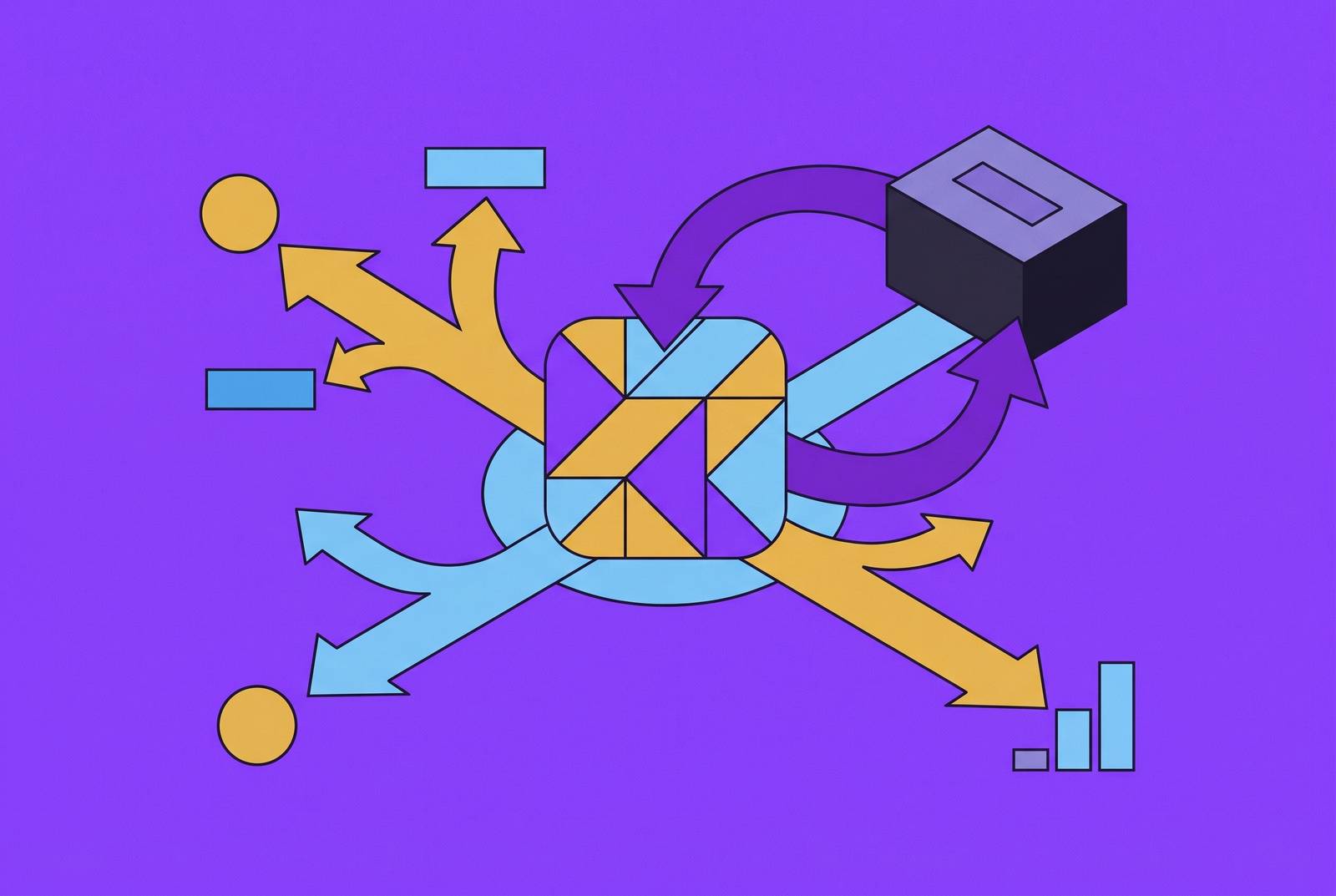
Paid media for sales-led B2B isn't bid management with a dashboard attached. Seven things have to work together, at the same time, continuously:
- Data and account-based marketing
- Visitor identification
- Programmatic buying
- Creative and landing pages
- CRM integration
- Attribution and measurement
- AI-driven optimization
Missing one layer breaks the signal that's supposed to travel from ad click to closed deal somewhere along the way.
Take conversion definition. It looks like a setup task, something you configure once and move past. It is not a setup task you configure once and move past. Smarketers found that deciding to optimize toward qualified meetings instead of form fills changes the cost per qualified deal meaningfully. To do that, the CRM has to talk to the ad platform, and most management setups never wire that connection.
Creative isn't a one-and-done task either. Performance on a given ad degrades meaningfully after the first month if nobody touches it. Someone needs to refresh creative regularly, on a schedule, without being asked.
Attribution is how the platform itself learns what to do next. Google's Performance Max, for example, works a lot better for lead generation when it gets fed real outcomes, qualified deals, closed revenue, instead of just counting form fills.
What you should actually be paying per lead comes from deal size and close rate. Whoever runs this program needs to understand the business.
That's the job: all seven layers, running at once, indefinitely. The question is which option below can actually carry that load.
What in-house paid media ownership costs you
Hiring someone in-house has an obvious appeal. They know the business, they can look at pipeline data directly, there's no agency markup, and no middleman standing between the ad account and the CRM.
One person usually ends up holding the entire stack. Strategy, execution, creative, attribution, optimization, all of it. When that person leaves, or gets pulled onto a different project, the program doesn't slow down. The program stops. Whatever they knew about what worked and why walks out the door with them, because most of it was never written down anywhere else.
A senior paid media specialist isn't cheap, and the ramp-up time before they're fully useful adds up on top of the salary. For a lot of mid-market B2B companies, that cost is hard to justify for a single role covering seven job functions.
The real weakness here is continuity. Most in-house programs run fine while the person running them is engaged and paying attention. They fall apart the moment priorities shift or that person takes a better offer somewhere else. That's usually the exact moment companies start looking around for alternatives, which tells you something about how fragile the model is by design.
In-house ownership works well when:
- The company is big enough to support a team, not just one person
- Marketing ops and RevOps are already mature
- There's a real feedback loop between sales and the ad account
It works poorly when one generalist marketer is juggling paid media along with five other responsibilities, or the company doesn't have the RevOps setup to close the loop between CRM and ad platform.
And even when it works, accountability gets murky. One person owning the whole thing sounds accountable on paper. In practice, that person often doesn't have the seniority to walk into a budget meeting and say the problem isn't the bid, it's the landing page. Nobody above them is checking that diagnosis either, so a wrong call can run for months before anyone notices.
Freelance PPC contractors: execution capacity without strategic ownership
Contractors fill a real gap. They cost less than an agency, they can start fast, and plenty of them are genuinely sharp at running the platforms themselves.
Their scope, though, is set entirely by whatever brief they're handed. They do what's asked. They don't dig into whether what's being asked for is the right thing to optimize. That means the company still owns the strategy, still has to define what a qualified lead even means, and still has to handle the CRM integration on its own.
Over enough time, most contractor relationships settle into the same pattern: the contractor runs what was already set up and makes small tweaks around the edges. Rarely are they in a position to push back and say the conversion goal is wrong, the attribution setup needs to be rebuilt, or the real problem is the landing page and not the bid. That's what happens when the job is scoped as execution and nothing more, not a knock on the people doing the work. It's what happens when the job is scoped as execution and nothing more.
Creative and landing pages sit almost entirely outside a contractor's responsibility. Someone managing Google and LinkedIn bids has no responsibility for whether the page those ads point to actually converts.
Continuity is a real risk too. Contractors juggle other clients, availability shifts, relationships change. When that happens, there's no backup person waiting in the wings, and no record of decisions beyond whatever the company itself kept track of.
Contractors work best for a company that already has a strong in-house strategist and just needs more hands on execution. They're a poor fit for a company that needs someone to diagnose what's actually wrong with the program.
One quick way to tell which kind of relationship is on the table: if the first question a contractor asks is "what's your target cost per lead" instead of "how do you define a qualified lead," strategic ownership was never part of the deal.
Where traditional PPC agencies break down for B2B
Agencies bring real advantages: a bigger bench of people, patterns picked up managing lots of accounts, relationships with the ad platforms, and processes already built for campaign setup and reporting.
The senior person who pitched the account is rarely the one running it day to day. That job falls to junior staff, and their incentive is keeping the account, not necessarily driving pipeline. Those are not the same goal, and the gap between them is where most agency relationships quietly go stale.
The fee structure makes it worse. Most agencies charge a percentage of media spend, so the incentive is to manage more spend, not make the spend work harder. A flat monthly fee removes that conflict. It's just not how most agencies are set up.
Closing the loop between the ad platform and the CRM, tracking a click all the way through a form fill into HubSpot or Salesforce, then feeding qualified-lead and closed-deal data back into the platform, takes RevOps access and skill that most PPC agencies simply don't have on staff.
Reporting tends to stay stuck at the platform level too: clicks, impressions, cost per form fill. Not pipeline. Not cost per qualified lead. Not revenue. The number the agency reports and the number the CFO actually cares about often aren't the same number, which makes the whole relationship hard to evaluate honestly.
Passivity builds over time. Once the initial setup is done, agencies tend to make small tweaks to existing campaigns instead of digging into what's actually broken, whether that's stale creative, a weak landing page, or a gap in attribution. If the client isn't asking pointed questions, those problems just sit there.
There's a B2B-specific mismatch on top of all this. Agencies built around driving lead volume often aren't configured for a 272-day buying journey involving 10 different people. The attribution model, the conversion goals, and the creative refresh schedule all need to look different than they would for a faster-moving, lead-gen-first business, and most agencies never rebuild those defaults for a longer sales cycle.
Agencies work best when a strong marketing leader is actively steering the relationship. They break down the moment the agency quietly becomes the one making all the strategic calls, because nobody on staff there is actually incentivized to make the calls that shrink the invoice.
Self-serve PPC software and AI-assisted platforms: real capability, real limits
Self-serve tools have genuinely gotten better. Platforms like Google Performance Max and Meta Advantage+ now handle a lot of optimization work automatically. Advantage+ campaigns have been reported to deliver meaningfully higher return on ad spend on average compared to manually managed ones.
Gartner projects that 40% of enterprise applications will have task-specific AI agents built in by 2026, up from under 5% in 2025. The platforms themselves are getting more autonomous by the year.
But adopting a tool and getting something out of it are two different events, and most companies skip the part in between. Research shows that 88% of organizations use AI somewhere in the business, but only 6% qualify as high performers where AI meaningfully moves results. Dropping a tool into an unchanged workflow tends to produce small gains that don't change outcomes.
Platform automation can only optimize what it can see. It can't tell anyone the landing page is the real problem, or that sales isn't following up on the leads it's getting, or that the whole program is optimizing toward the wrong goal. That diagnosis still needs a person who understands the business, and no amount of automation replaces that judgment.
Performance Max without offline conversion data feeding back into it is optimizing toward the wrong thing. It maximizes whatever it's told to maximize, and a form fill is not pipeline.
These platforms also expect someone to run them. Someone still has to set the strategy, choose the right conversion goals, keep the creative fresh, wire up the CRM, and make sense of the output. Self-serve doesn't mean self-running, whatever the name suggests.
They work best for teams with a solid marketing ops function already in place, people who can configure these tools, watch them, and interpret what they're saying. They're a poor fit for a company that needs someone to handle execution end to end.
The honest read: these platforms are strong ingredients in a well-run program. They are not a replacement for someone actually running that program.
How fully delegated AI-driven execution changes the model
This model splits the work on purpose. AI agents handle the continuous, repetitive execution: adjusting bids, rotating creative, segmenting audiences, testing landing pages, watching attribution. A named human expert handles strategy, judgment calls, and anything that actually matters if it goes wrong. That split is the whole design, not an afterthought bolted onto a software product.
In a program running at full maturity, agents plan out multi-step campaigns, adjust bids as conditions change, rotate creative before it starts to fade (getting ahead of the performance drop-off that comes with stale creative), catch shifts in audience behavior, and flag attribution problems, all without waiting for a scheduled call to bring it up.
McKinsey's 2026 B2B Pulse Survey, covering nearly 4,000 buyers and sellers across 13 countries, found that growth leaders who built AI directly into their core workflows pointed to seller efficiency (59%) and better customer experience (53%) as the biggest payoffs. High-growth companies were three times more likely to have raised their AI investment by double digits year over year in 2026.
Every campaign leaves behind evidence: which audience converted, which creative got tired, which landing page version won. The next decision starts from that history instead of a blank page. That's the real difference between a delegated system and an agency starting fresh with a new account team on day one.
None of this removes the need for a human, and it shouldn't. Decisions with real consequences, like changing what counts as a qualified lead, shifting budget between Google and LinkedIn, or deciding whether the actual constraint is creative or the landing page, still need a person with judgment. The agents surface the problem. They don't decide it. The named expert is the person the company can actually hold responsible when something goes wrong.
Diagnosis becomes part of what the system does, not an extra service tacked on. A well-built delegated system can point to whether the real bottleneck is creative, the landing page, a gap in attribution, or something else in the funnel, instead of handing over platform numbers and calling it a report.
The fee structure matters here too. A flat retainer, not tied to media spend, keeps the incentive lined up with efficiency instead of volume, the same conflict that undermines most agency contracts from day one.
Forrester's research on AI-driven marketing workflows found the time between spotting a performance signal and acting on it dropped from 6.3 days to 1.1 days. In practical terms, a delegated AI system responds to what's happening in the account faster than any agency account team realistically can, because the agent is watching continuously and the account team is checking in on a schedule.
Comparing the four alternatives across the dimensions that matter for sales-led B2B
Lining these four options up against pipeline accountability, execution continuity, full-stack coverage from creative through attribution, depth of CRM integration, diagnostic ability, speed, and alignment of the fee structure with the client's interests makes the picture clear fast.
In-house ownership carries the deepest business knowledge and the shallowest bench. It works only as long as one person stays in the seat.
Freelance contractors bring cheap, fast execution capacity and nothing resembling strategic ownership. The company still carries all the diagnostic weight.
Traditional PPC agencies bring scale and platform relationships, undercut by a fee structure that rewards spend over performance and junior staff turnover that erodes institutional knowledge account by account.
Self-serve and AI-assisted platforms bring genuinely strong automation, gated behind a requirement most companies underestimate: someone skilled has to configure, feed, and interpret the thing.
Fully delegated AI-driven execution, with expert governance, is built differently from the ground up:
- Pipeline accountability: built around pipeline metrics from the start, with conversion definitions and CRM integration as part of the system, not optional extras
- Continuity: highest of the four, since agents keep running while the human expert governs rather than executes, so turnover doesn't stall the program
- Full-stack coverage: creative, landing pages, attribution, and reporting working as one system rather than separate pieces coordinated by hand
- Compounding: campaign history accumulates, so each round of decisions starts from real evidence instead of a blank slate
- Fee structure: a flat retainer, decoupled from spend, keeps the incentive on efficiency rather than volume
- Best for: sales-led B2B companies that need full-stack accountability and either can't or don't want to build all of it in-house
None of the first three options solve continuity on their own. Someone leaves, a contractor's plate fills up, an agency account goes quiet, and the program stalls right along with them. It's the same failure mode wearing three different outfits, because all three tie the program's survival to one person's attention span. It's the same failure mode wearing three different outfits, because all three tie the program's survival to one person's attention span. A delegated, AI-driven model closes that gap not by removing the human from the picture, but by making sure the program keeps running regardless of what happens to any one person on it.